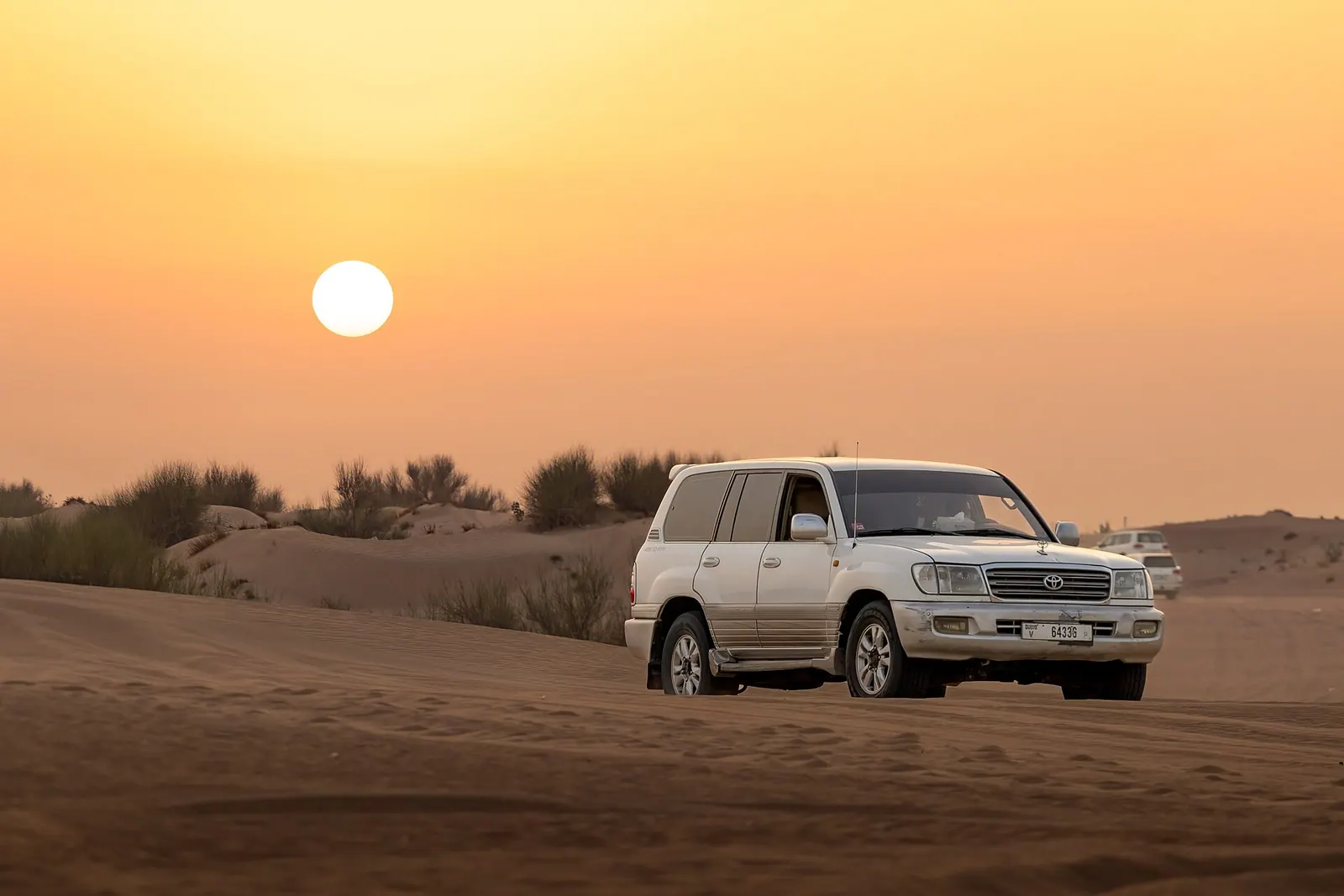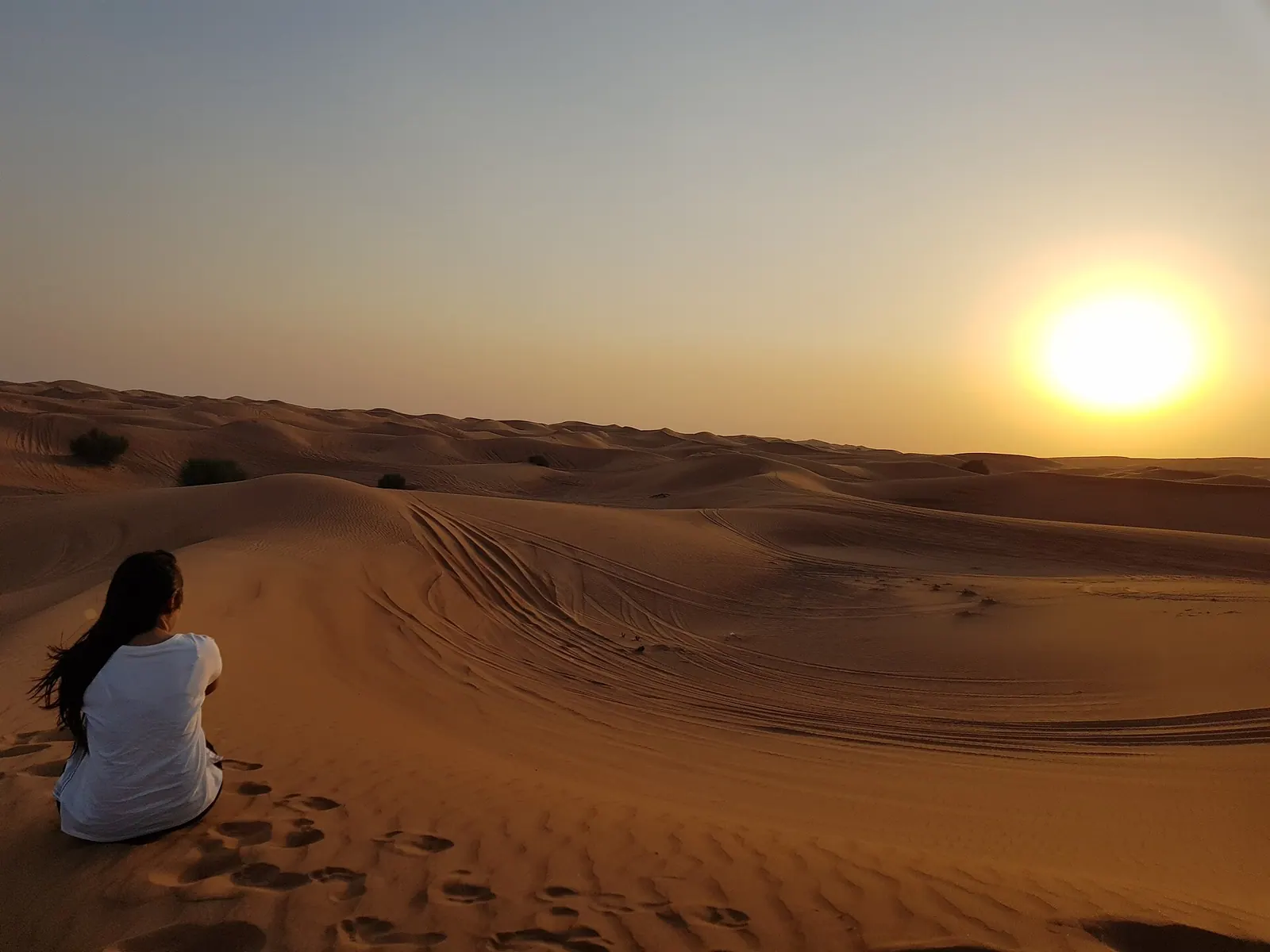
We get asked constantly by parents planning a Dubai trip: is the desert safari appropriate for kids, and at what age? The short answer is that most children over 3-4 handle it well and genuinely love it, but there are real considerations around dune bashing, heat, and camp logistics that make some packages a far better fit for families than others. Here's the practical guide we give parents booking through us.
Are there age limits?
Most operators don't enforce a strict minimum age for the overall safari, but dune bashing specifically often has guidance around infants and toddlers — many operators recommend against dune bashing for children under 3, and some ask that babies under 1 year skip the bashing segment entirely due to the jolting motion. If you're travelling with an infant, call ahead and request a gentler drive or a camp-only itinerary; most operators accommodate this without issue.
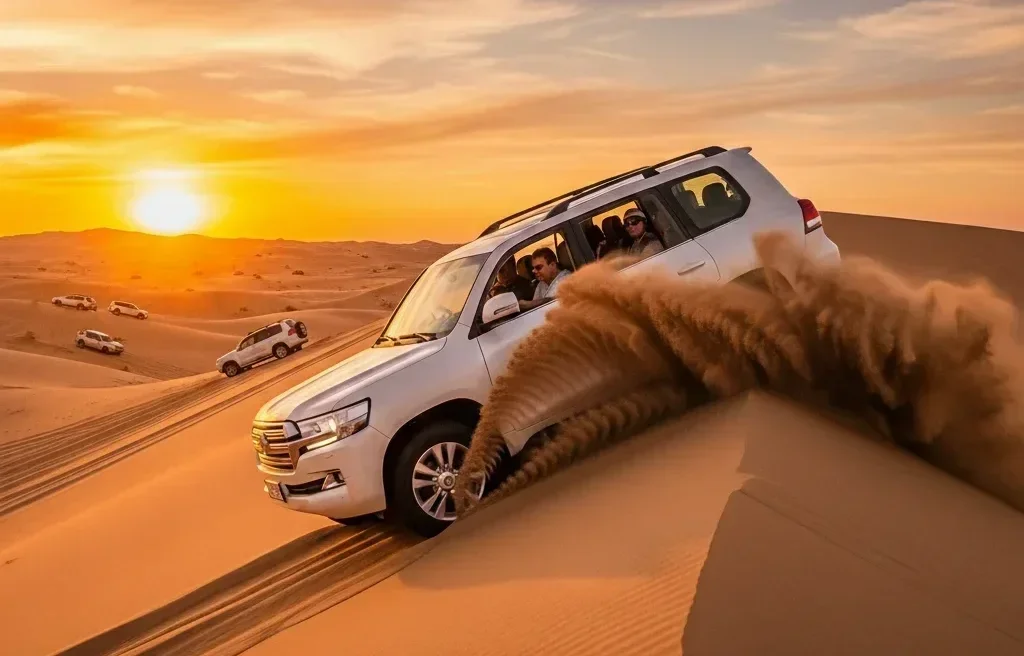
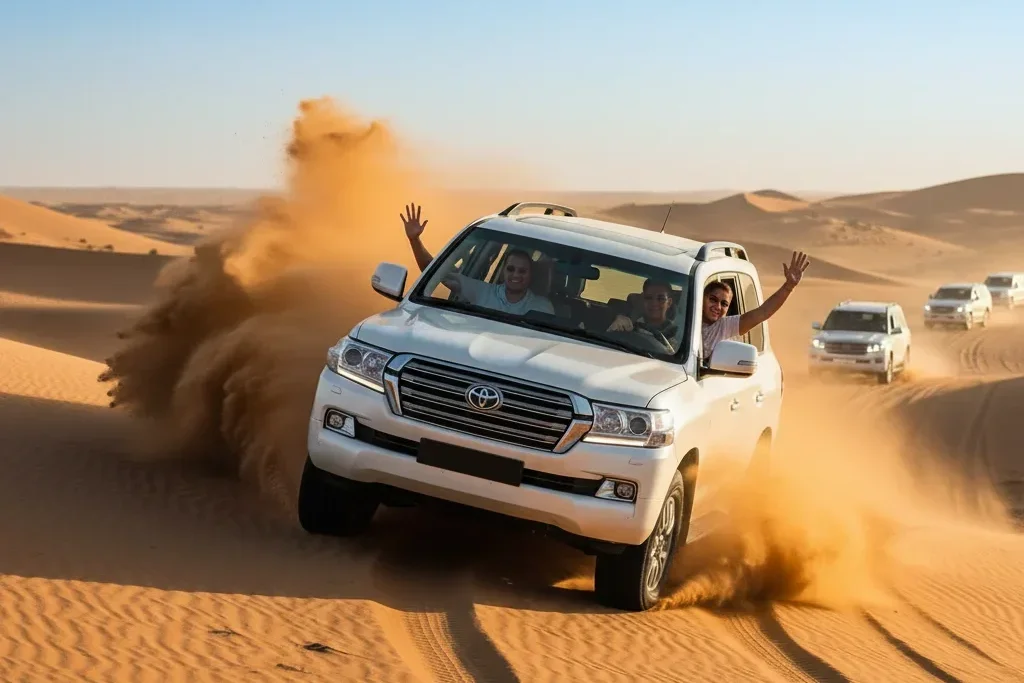
For children aged 4 and up, dune bashing is generally considered safe and, from what we've observed on hundreds of trips, is usually the part kids remember most fondly — many describe it as 'like a rollercoaster' afterwards. Seatbelts are mandatory for every passenger regardless of age, and child booster seats are not typically provided, so bring your own if you have a car seat requirement for a toddler.
Which package works best for families
We consistently recommend a private safari over shared for families with young children — you're not on anyone else's schedule, you can ask the driver to slow down on the bashing, and you're not squeezed into a shared vehicle with strangers for over an hour of driving. A private evening-red-dunes-desert-safari-with-bbq-veg-dinner-quad-bike booking works well for families with kids old enough for the quad bike (usually 12+ to ride alone, or accompanied rides for younger kids depending on the operator).
If your kids are very young (under 5) or you're travelling with a large extended family, a morning safari can also be a smart alternative — shorter overall (3-4 hours vs 6), avoids late-night overstimulation, and skips the crowded evening camp entirely.
What kids actually love most
One thing parents consistently underestimate: the simple joy of running around on open sand dunes at sunset is often what kids talk about most, more than any of the structured activities. Build in unstructured time if your itinerary allows it.
- Camel photo-ops — nearly universal hit with children of all ages
- Sandboarding down the dunes — a favourite for kids 6+
- Henna painting at camp — popular with girls especially
- The fire show and tanoura dance at the evening camp
- Quad biking (for kids old enough, usually with an adult or solo from around age 12-16 depending on operator rules)
Safety considerations specific to kids
Heat is the primary safety factor, especially May through September when desert temperatures can exceed 40°C even in early evening. Keep kids hydrated throughout, apply sunscreen before departure (there's minimal shade at most camps until after sunset), and consider a morning or winter-season booking if your child is heat-sensitive.
During dune bashing, ask the driver directly to go gentler — every licensed driver we've worked with is happy to adjust speed and intensity when told there are young children or anyone prone to motion sickness on board. This is a completely normal and common request, not an inconvenience.
What to pack for a family desert safari
Desert evenings swing from 38C to 18C in a couple of hours, and the sand gets everywhere. Pack these and the night runs smoothly.
- Sunscreen and a hat (there's little shade before the camp's tent area)
- A light jacket for each child (winter evenings drop to 15-18°C after sunset)
- Wet wipes and a spare change of clothes — sand gets everywhere, especially after sandboarding
- Motion sickness bands or medication if your child is prone to carsickness
- A portable charger — phone cameras get heavy use for camel and sunset photos
- Snacks for the drive out, since dinner isn't served until you reach camp around 5:30-6:30pm
Will there be food kids will actually eat?
BBQ buffets typically include grilled chicken, rice, bread and simple sides that most kids handle fine, though picky eaters may find the spice level on some dishes stronger than expected. It's worth packing a small backup snack just in case, especially for toddlers. Most camps can also arrange a simpler plate on request if asked at check-in.
Traveling with toddlers or infants
For infants under 12 months, we generally advise families to skip the desert safari altogether or book a very short, private, camp-only visit without dune bashing — the combination of heat, long vehicle time and late evening timing isn't ideal for very young babies. For toddlers 1-3 years old, a private safari with a shortened bashing segment and an early evening slot (to avoid overtiredness) tends to work well.
If in doubt, call ahead before booking and describe your child's age and any sensitivities — operators booking private safaris are generally flexible about adjusting pacing, activities and timing for young families.
Pairing desert safari with other family activities
Many families combine a desert safari evening with a relaxed dhow-cruise-dinner-dubai-marina on a different night, or a dubai-city-tour-half-day-private earlier in the trip to see attractions at a gentler pace. Spacing big activity days out rather than stacking them back-to-back generally leads to happier, less overtired kids by day 3-4 of a Dubai trip.
Dietary needs and allergies: what camps can actually handle
Vegetarian dinners are handled well across almost every camp we work with — expect grilled vegetables, paneer or halloumi, dal, rice and the same salads and bread as the standard buffet, and it's rarely an afterthought since a meaningful share of Dubai's visitor base requests it. Vegan requests are less consistently handled; confirm specifically that dairy-based items (halloumi, some sauces) will be swapped out, rather than assuming 'vegetarian' automatically means vegan-safe.
Genuine allergies (nuts, shellfish, gluten) need to be flagged at booking, not at the buffet table, since camp kitchens prepare set quantities in advance and cross-contamination risk on a shared buffet line is real — grilled meats and vegetables often share the same grill surface. If a severe allergy is involved, ask specifically whether the camp can prepare a separately-grilled plate; most can if given 24 hours' notice, but very few can improvise this on the spot for a walk-in request.
Halal is the default across every camp in Dubai, so this specific concern rarely needs to be raised — all meat served is halal-certified as standard practice, not a special request.
Getting good photos without a professional photographer
The single biggest photo mistake we see is guests trying to capture the sunset dune shot on auto mode with the sun directly behind their subject, producing a silhouette with no visible face. Instead, angle your subject so the sun is to the side (roughly 45 degrees), which keeps the sky's colour in frame while still lighting the face enough to see it — most phone cameras handle this far better than a direct backlit shot.
For the dune-bashing photos and video, don't try to film through the windscreen — glare and dust make it nearly unusable. Wait for the vehicle to stop at a photo point, step out, and shoot from a low angle looking up the dune slope, which exaggerates height and makes for a more dramatic image than a flat shot from the top.
If photography genuinely matters to your trip, red dune packages are worth the premium for this reason alone: the deeper colour contrast at golden hour photographs noticeably better than the paler standard dunes, and less crowded camps mean fewer strangers wandering into your frame.
What the total actually costs once you add it up
A useful way to think about desert safari pricing is as a base fee plus optional layers, rather than one fixed number. The base (standard evening safari, shared, standard dunes) sits at AED 90-180 per person all-in. Add red dunes and you're at AED 200-350. Add quad biking on top of either tier and you're paying an extra AED 100-150 regardless of which dune package you chose, since it's priced as a separate activity, not a dune-tier upgrade.
Private transport changes the maths entirely since it's priced per vehicle: a private standard safari for a group of four works out to roughly AED 175-250 per person once split, putting it close to the shared red-dune price point but with the added benefit of your own vehicle and schedule. Knowing these layers before you start comparing listings makes it much easier to spot which package genuinely offers better value rather than just a lower headline price.
Book a family-friendly desert safari
Browse family-suited packages at /trip-type/desert-safari, or tell us your children's ages and any special requirements at /custom-trip and we'll put together a private itinerary paced right for your family — gentler bashing, earlier pickup, and a menu that works for picky eaters included.
What a family package actually costs, age by age
Most operators price children under 3 as free (they typically don't get a separate quad seat or full buffet plate), children 3-11 at 50-70% of the adult rate, and 12+ as full adult price. A family of two adults and two kids aged 6 and 9 booking a standard shared evening safari (AED 150 adult rate) would pay roughly AED 300 for adults plus AED 150-210 for the two children, landing around AED 450-510 total rather than a flat AED 600 for four full adult tickets.
Quad biking has a strict minimum age (usually 8, sometimes 10) and a minimum height requirement regardless of age, so budget for at least one adult and possibly one child missing out on this specific add-on — confirm the exact age and height cutoff with your operator before promising a child they'll get to ride.
A realistic hour-by-hour timeline with young children
3:00pm pickup from your hotel, with roughly 45-60 minutes of driving including a stop at a designated point for a quick bathroom break if your camp is on the far edge of the desert. 4:15pm arrival for a gentler dune bashing session — most operators offer a 'family mode' with less aggressive driving on request, worth asking for explicitly rather than assuming it's automatic. 4:45pm sandboarding and camel photo stops, which is usually the segment kids enjoy most and where you'll want your camera ready.
5:30pm arrival at camp for henna, falconry photos and free time before sunset around 5:45-6:15pm in winter (later in summer). 6:30pm buffet dinner opens — arrive early if your children are picky eaters, since the earliest buffet rounds tend to have the widest untouched selection. 7:00-8:00pm live entertainment (tanoura and fire shows can be genuinely thrilling for kids but occasionally startling for toddlers, so sit toward the back if you're unsure how your child will react). 8:30-9:00pm return pickup begins.
Common issues families run into, and how to head them off
The most frequent complaint from parents is a toddler frightened by the fire show's sudden flames or loud tanoura drumming — if your child startles easily, request seating near an exit aisle so you can step out briefly without disrupting other guests. The second most common issue is a hungry, cranky child by 6pm because dinner doesn't start until 6:30-7pm; packing a small snack for the drive out solves this reliably.
Motion sickness during dune bashing is also common in children under 8 who haven't experienced off-road driving before — mention this to your driver before the bashing segment starts, as most will happily dial back the intensity for a child who looks uncomfortable, and it's far easier to prevent than to manage once a child is already unwell.
A real case: a family with a nervous 5-year-old
A couple travelling with a 5-year-old messaged us worried their daughter would be frightened by dune bashing after reading mixed reviews online. We booked them into a private vehicle rather than shared, specifically so the driver could adjust intensity purely for their comfort rather than balancing five other adults wanting a thrilling ride. The driver started very gently, checked in after the first minute, and gradually increased the pace only once the girl was smiling rather than gripping the seat.
Their feedback afterward was that the private option, while pricier, was the right call specifically because of the flexibility — a shared vehicle carrying thrill-seeking adults would likely have moved faster than was comfortable for a nervous young child, and there's no polite way to ask a shared vehicle to slow down for one passenger.
Tours mentioned in this guide
Frequently asked questions
How much does a desert safari cost for a family with kids?+
Prices for Dubai Desert Safari For Kids range from AED 89–400 per adult depending on the package. Popular add-ons: Quad Biking AED 75, Dune Buggy AED 500, Falcon Photo AED 10, VIP Camp Seating AED 50. Child pricing and hotel pickup are shown on each tour page.
Is desert safari safe for a 3-year-old?+
Generally yes for the camp portion; for dune bashing, ask the driver for a gentler drive or consider skipping that segment for children under 3-4.
What's the minimum age for quad biking?+
Most operators require riders to be at least 12-16 years old to ride solo; younger children can sometimes join an adult on a buggy, subject to operator policy.
Do kids need their own seatbelt during dune bashing?+
Yes, every passenger including children must be seatbelted; booster or car seats aren't provided, so bring your own if needed.
Is the food kid-friendly at desert safari camps?+
Reasonably — grilled chicken, rice and bread are usually well received, though it's wise to pack a backup snack for picky eaters.
Should I book a morning or evening safari with young kids?+
Morning safaris are shorter (3-4 hours) and avoid late-night overstimulation, making them a good fit for toddlers and very young children.
Is it too hot for kids in summer?+
Evening safaris still run in summer since dune bashing happens before or around sunset, but daytime heat leading up to it can be intense — hydration and sunscreen are essential.
Can babies come on a desert safari?+
It's possible with a private, camp-focused booking skipping dune bashing, but most operators and parents alike recommend waiting until at least 12 months.