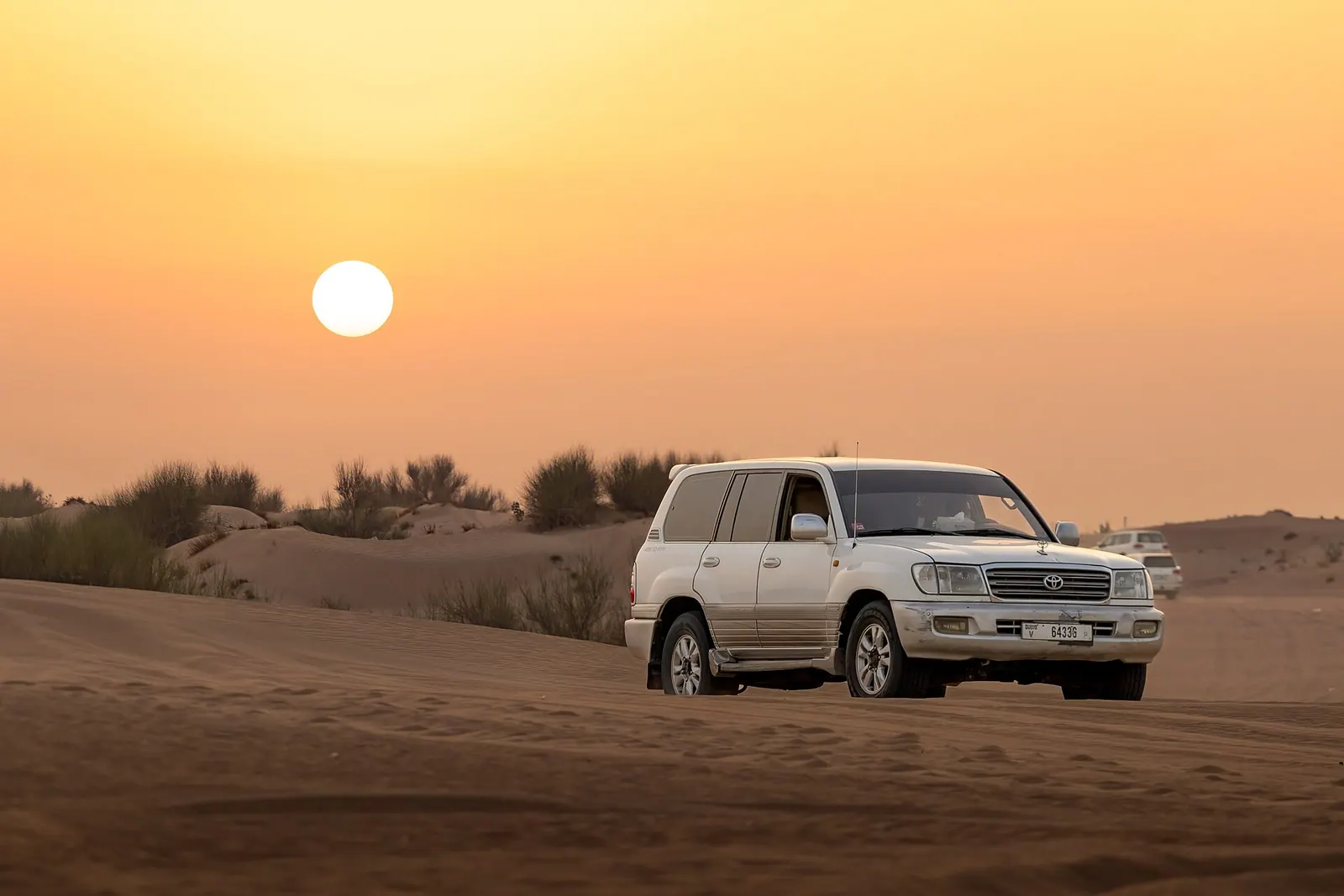
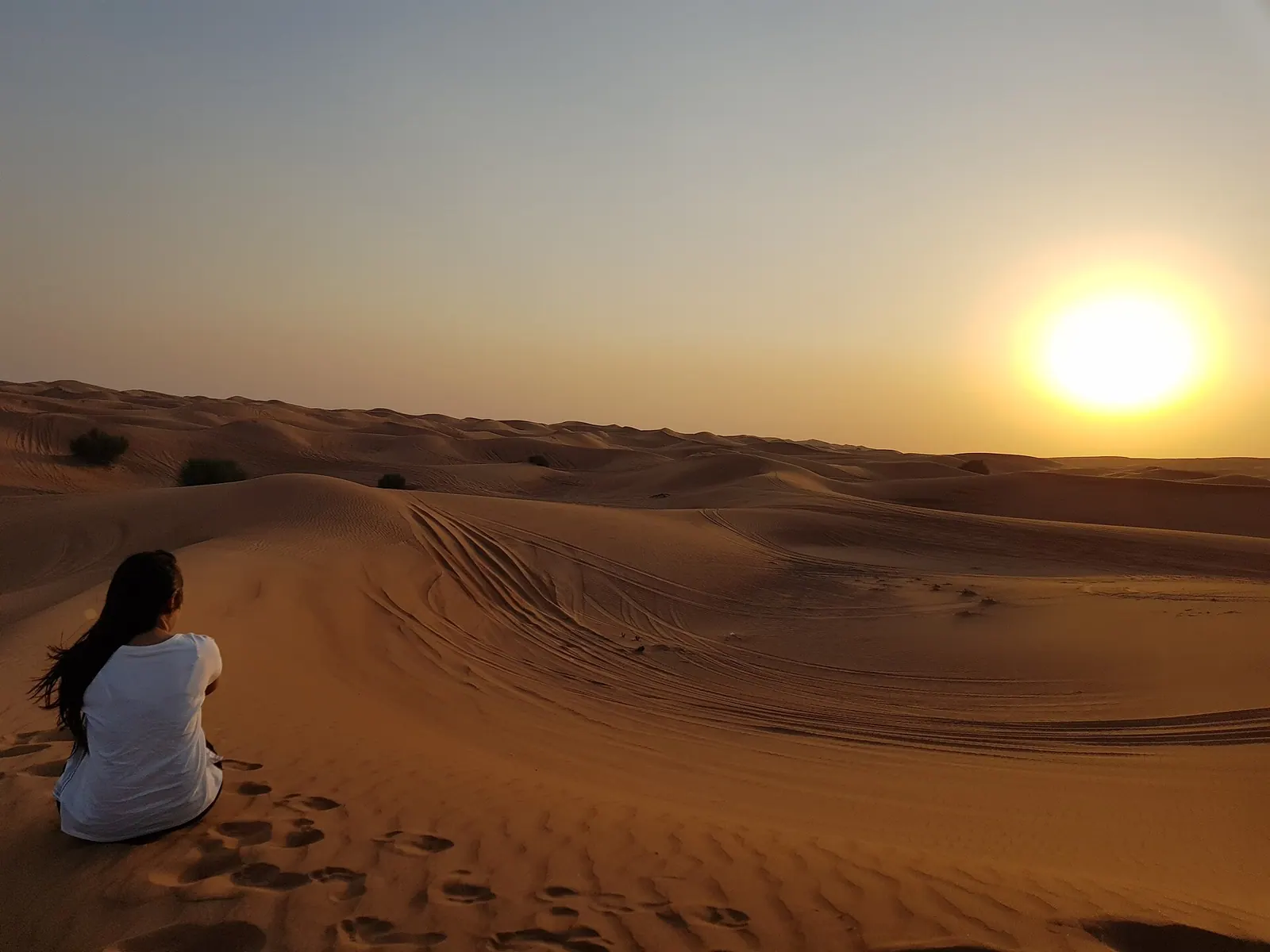
"How long does a desert safari actually take?" is one of the most-asked questions we get, usually from people trying to fit it around a flight or another booking the same day. The listing says '6 hours' but that number rarely tells the full story. Here's the real timeline, broken down by safari type, including the parts operators don't put in bold on the booking page.
Evening desert safari: the real timeline
A standard evening desert safari is listed as roughly 6 hours, and that's accurate for the core activity — but total door-to-door time is usually 6.5 to 8 hours once you count pickup and drop-off. Pickup typically starts around 3:00–3:30pm depending on season (earlier in winter when sunset is earlier), and if you're not the first hotel on the route, you could be riding around Dubai for 30–75 minutes before the desert even starts.
Once at the desert, dune bashing runs 20–30 minutes, followed by roughly 90 minutes at the camp for camel photos, henna, falconry photos and sandboarding, then a further 2–2.5 hours for the BBQ dinner and entertainment show (fire show, tanoura, belly dance). Drop-off starts around 9:00–9:30pm, but again — if your hotel is last on the route, you might not be back until 10:00 or later.
- Hotel pickup: 3:00–3:30pm (varies by season)
- Drive to desert: 45–60 minutes
- Dune bashing: 20–30 minutes
- Camp activities (camel, henna, sandboarding): ~90 minutes
- BBQ dinner + show: 2–2.5 hours
- Drop-off: typically 9:00–10:30pm depending on your hotel's position on the route
Morning desert safari: shorter and tighter
Morning safaris are the speed version — typically 3.5–4.5 hours total, pickup around 6:30–7:00am, back by 11:00am. There's no BBQ dinner or evening show; instead you get sunrise dune bashing, a light breakfast or refreshments at camp, and sometimes camel riding, before heading back. It's the format we recommend to anyone with an afternoon flight or a same-day activity planned, since it clears your whole afternoon.
Overnight desert safari: the full day-into-day version
Overnight safaris start on the same afternoon schedule as a regular evening safari (pickup around 3:00pm) but instead of drop-off at 9:30pm, you stay overnight in a desert camp with proper beds or premium tents, watch the stars away from city light pollution, and get woken for a sunrise activity before a late-morning drop-off — typically 9:00–10:00am the next day. Total elapsed time is around 18–19 hours, though obviously 8 of those are sleep.
This is the format people most often underestimate on timing — if you have a flight the next afternoon, overnight safari works perfectly; if your flight is early morning, skip it, since the drop-off simply won't get you to the airport in time.
How the season shifts your timing
Sunset in Dubai swings from around 5:30pm in December/January to nearly 7:15pm in June/July, and operators adjust pickup times accordingly — winter pickups are earlier (around 2:30–3:00pm) so dune bashing lines up with the earlier sunset, while summer pickups shift to 3:30–4:00pm. If you've booked based on a friend's timing from a different trip, don't assume it'll match — always check the confirmed pickup window on your specific voucher.
Planning your day around a desert safari
Don't book anything requiring focus or energy for the morning after an evening safari with a late show — you'll likely be back at your hotel between 9:30 and 10:30pm, tired and slightly sandy, not in the mood for an early wake-up the next day. If you want to combine desert safari with a city activity like the /trip/at-the-top-burj-khalifa-124th-floor or a /trip/dhow-cruise-dinner-dubai-marina, put the desert safari on a different evening rather than the same day — they both run into the evening and back-to-back bookings create needless stress.
For travellers juggling a tight multi-day Dubai itinerary, our team can sequence a morning safari with an afternoon city tour on the same day if timing is genuinely limited — reach out via /custom-trip and we'll build the schedule around your actual flight times rather than a generic template.
Working out the actual value per minute of thrill
If dune bashing thrill is genuinely your reason for booking, it's worth doing the maths on what the AED 100-170 premium actually buys. Regular dune bashing runs about 20-30 minutes of moderate off-road driving; red dune bashing runs a similar 20-30 minutes but with noticeably steeper drops and sharper terrain, meaning the premium is really paying for intensity per minute rather than more minutes overall.
For most guests who've never done any desert safari before, the regular tier is genuinely satisfying and the red dune premium doesn't register as essential. For guests who've already done a Dubai desert safari once, or who specifically seek out thrill activities elsewhere in their travels, the red dune upgrade is where the actual difference lives, and it's the upgrade we most consistently hear positive feedback about from repeat visitors.
How weather and timing affect each option differently
Regular dune areas closer to the city are marginally more sheltered from wind since they're lower and more built-up with camp infrastructure, meaning sandstorm-adjacent windy evenings are slightly more comfortable there than at the more exposed red dune sites further out. If you're booking during shoulder months (April-May, October) when occasional dusty conditions are more common, this is a small but real factor worth asking your operator about on the day.
Sunset timing shifts both options similarly through the year — winter sunsets around 5:30-6pm mean both regular and red dune packages catch golden hour mid-safari, while summer's later 7pm sunset means more of the drive and dune bashing happens in daylight, with dinner falling after full darkness for both tiers.
A real case: a repeat visitor who tried both back to back
A guest visiting Dubai for the third time told us she'd done the standard shared safari on her first two trips and wanted to know if red dune was 'actually different or just marketing.' We booked her a private red-dune evening, and she messaged us afterwards specifically about the dune-bashing intensity — she said the standard safari always felt fun but safe, while the red dune version had two or three moments of genuine stomach-drop excitement that the regular dunes never produced.
Her one piece of feedback for future guests: eat a light meal before the safari rather than an empty stomach, since the steeper red dune bashing is rougher than the regular version and can catch out anyone who skipped lunch beforehand.
How duration and price scale together across formats
A standard 6-hour shared evening safari (AED 90-180) includes roughly 2 hours of transport and 4 hours of desert activity and dinner. A red dune version extends total time by 30-45 minutes purely due to the longer drive, for AED 200-350. An overnight safari runs 16-18 hours door to door (afternoon pickup to next-morning drop-off) for AED 350-600 per person, genuinely tripling your desert time compared to a standard evening.
A private safari doesn't inherently add duration, but it does compress the non-desert portions (pickup, drop-off, waiting for other guests), meaning more of your total booked hours are spent actually doing something rather than sitting in transit or queuing at camp.
Morning safaris versus evening safaris — a different duration shape entirely
Morning safaris typically run 3-4 hours total (roughly 6am-10am pickup to drop-off), focused on dune bashing, sandboarding and a light breakfast at camp, with no dinner or evening entertainment component. They're a genuinely different product from the standard evening safari rather than a shorter version of the same thing, and appeal specifically to guests with an afternoon flight or an evening commitment elsewhere in the city.
If your primary goal is the sunset and dinner experience, a morning safari won't deliver that regardless of how much you pay — the sunset, campfire, buffet and live show are exclusively part of the evening format, so check which timeframe a listing actually covers before assuming duration and content scale together predictably.
How the season shifts the practical length of your evening
Winter (November-March) sunsets around 5:30-6pm mean the golden-hour dune bashing and sunset photo stops happen earlier in the overall timeline, often allowing a slightly earlier pickup (3-3:30pm) while still catching the light. Summer's 7pm sunset pushes the entire schedule later, with pickups closer to 4-4:30pm and dinner often starting closer to 7:30-8pm, meaning your overall evening runs later into the night even though the total duration is similar.
This matters most if you have an early flight the next morning — a summer booking's later finish time (often 9:30-10pm drop-off) leaves less buffer than a winter booking's earlier 8:30-9pm finish, worth factoring into your decision if your trip has a tight departure schedule.
Planning the rest of your day around safari timings
Because an evening safari swallows roughly 3pm to 9:30pm door to door, treat the day of your safari as a half-day for everything else. A morning at Dubai Mall and the Burj Khalifa observation deck works well, as does a late breakfast in Jumeirah followed by an hour at the beach — anything that ends by 1:30pm and leaves you time to shower, eat a light lunch and be ready in the hotel lobby fifteen minutes before your pickup window opens. Avoid booking a second paid activity for the same afternoon; guests who try to squeeze in a Dubai Frame slot or a marina cruise almost always end up rushing or missing the pickup entirely.
The morning safari is the opposite: it frees your entire evening. Pickup is typically 6am to 7am with a drop-off between 11am and 1pm, which leaves the whole afternoon and night open for Dubai Fountain shows, Old Dubai souks or a dhow dinner cruise. Families with young children often prefer this shape because it avoids a late night, and photographers like the soft early light on the dunes before the heat haze builds.
- Evening safari: keep the afternoon completely free from 2pm
- Morning safari: expect a 5:30am alarm, but the day stays open
- Allow 45-90 minutes of pickup buffer either side of your stated window
- Don't schedule airport departures within 4 hours of your drop-off time
Tours mentioned in this guide



Frequently asked questions
How much does a desert safari cost based on duration?+
Prices for Dubai Desert Safari Duration range from AED 89–165 per adult depending on the package. Popular add-ons: Quad Biking AED 75, Dune Buggy AED 500, Falcon Photo AED 10, VIP Camp Seating AED 50. Child pricing and hotel pickup are shown on each tour page.
How long is a standard evening desert safari?+
The core activity is about 6 hours, but total time from hotel pickup to drop-off is usually 6.5–8 hours depending on your hotel's position on the pickup route.
Is morning desert safari shorter than evening?+
Yes — morning safaris run 3.5–4.5 hours total with no BBQ dinner, making them the fastest option if you need your afternoon free.
What time does desert safari pickup start?+
Evening safari pickup typically starts 2:30–4:00pm depending on the season; morning safari pickup is around 6:30–7:00am.
What time do you get back from an evening desert safari?+
Most guests are dropped back between 9:00pm and 10:30pm, depending on how many hotels are on your vehicle's drop-off route.
How long does dune bashing itself last?+
The dune-bashing portion is typically 20–30 minutes — brief but intense; the rest of the timeline is camp activities, dinner and entertainment.
Can I fit a desert safari around a same-day flight?+
Yes with careful planning — a morning safari clears by 11am for an afternoon flight, and an evening safari works fine before a next-morning flight after 10am, but avoid overnight safaris before early flights.
Does private safari save time?+
It can save 20–45 minutes on pickup and drop-off since there's no multi-hotel route, though the core desert activities take the same amount of time either way.