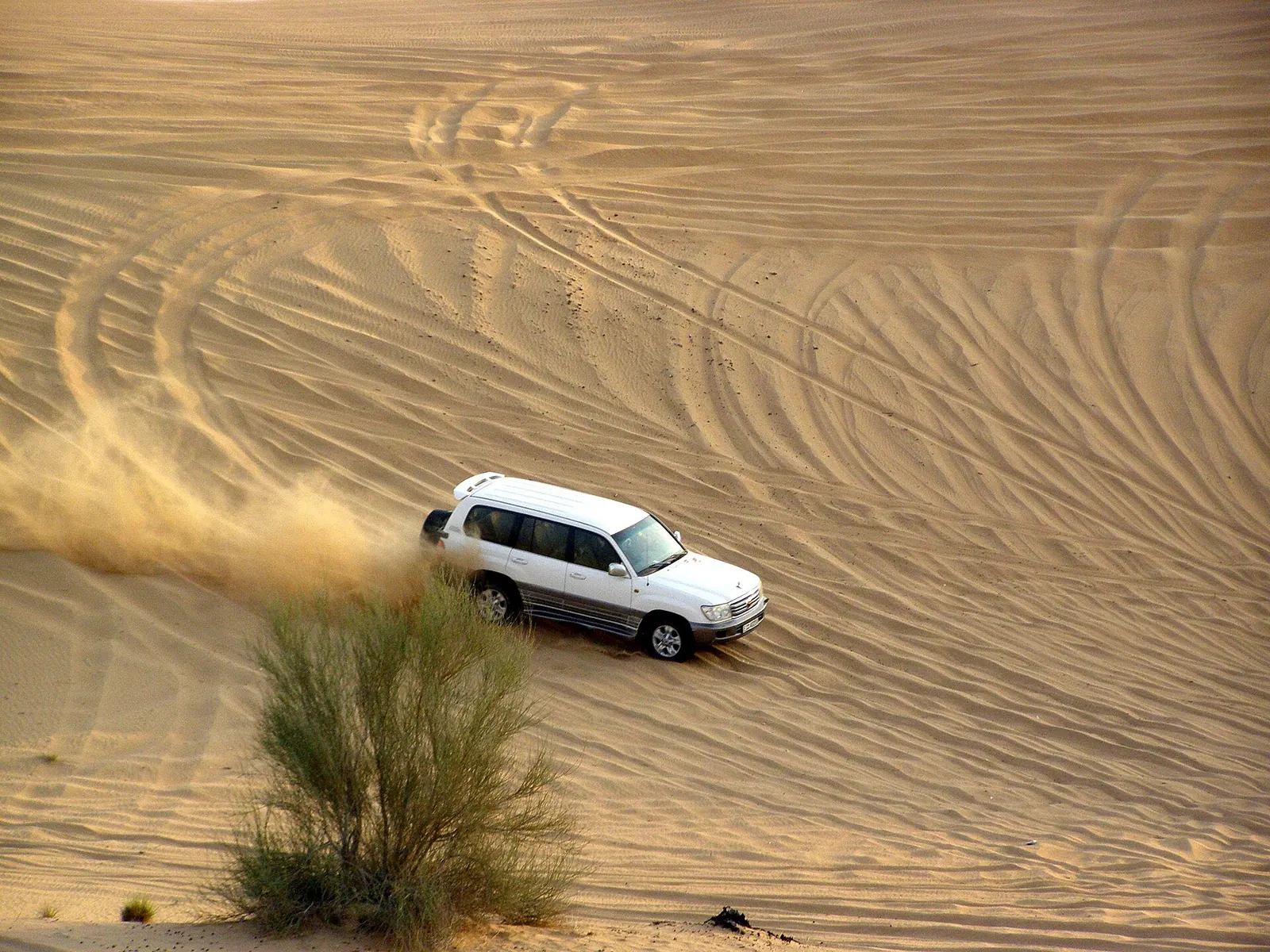
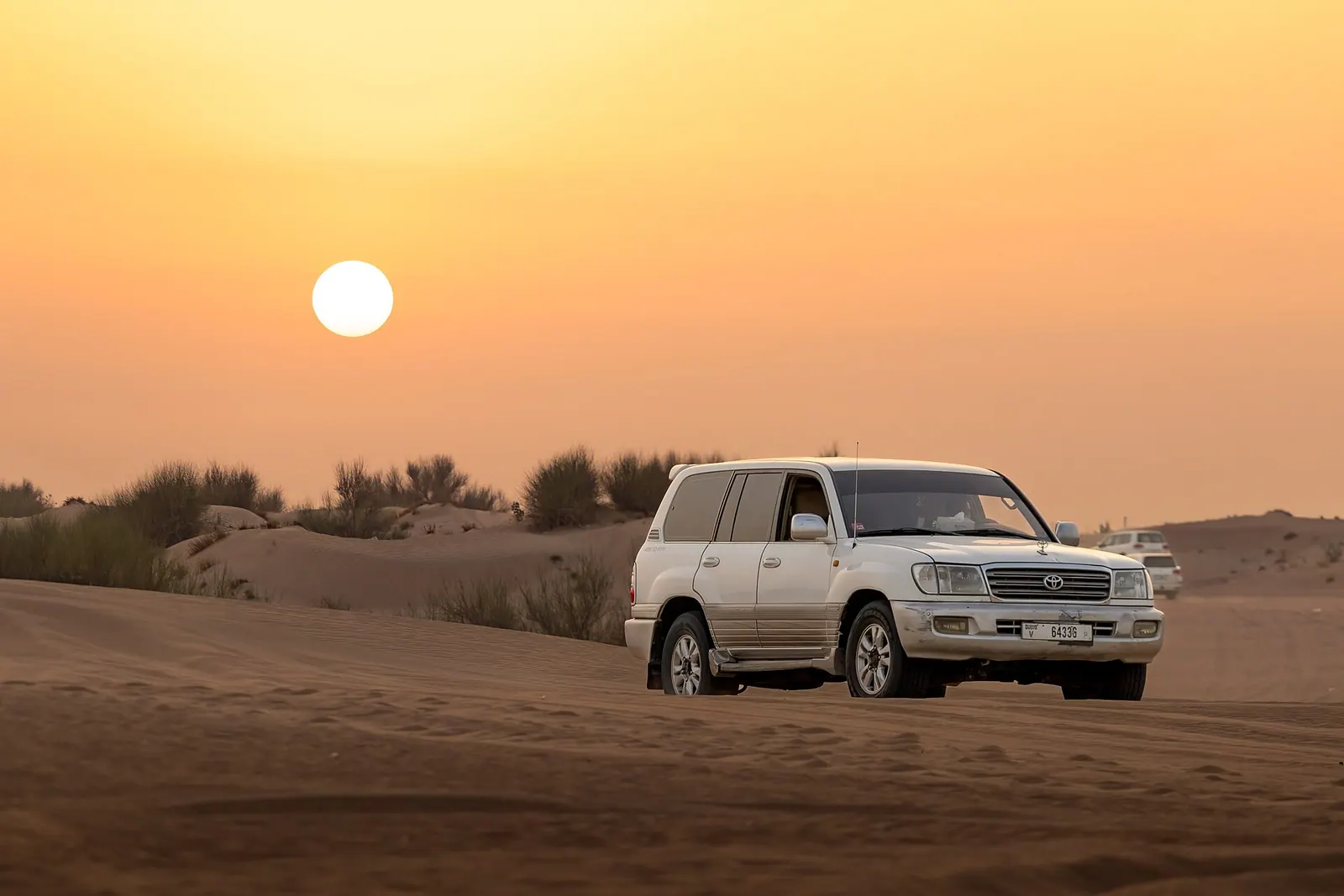
"Regular" and "red dune" desert safari are both sold as Dubai's classic evening safari, and from a distance the itineraries look identical — pickup, dune bashing, camel photos, BBQ dinner, tanoura show. Having run both for years, the difference is real, but it's not the difference the marketing implies. Here's what actually changes when you pay the AED 100–150 premium for red dunes.
Where each safari actually takes place
A regular (or 'standard') desert safari typically operates out of the Al Lahbab or Al Awir desert conservation areas, roughly 45 minutes from central Dubai. The dunes here are moderate — golden-beige in colour, rolling rather than towering, and heavily used by dozens of operators every evening. It's efficient, close, and exactly what most first-timers picture when they book 'desert safari.'
A red dune safari drives further, usually 60–75 minutes out toward the Al Faya or Fossil Rock area near the Sharjah–Dubai border, where the sand genuinely turns a deep rust-red thanks to higher iron oxide content, and the dunes are noticeably taller and steeper. Fewer operators run this route because it's further and requires more experienced drivers, which is exactly why it feels less crowded on arrival.
The dune bashing difference is the real reason to upgrade
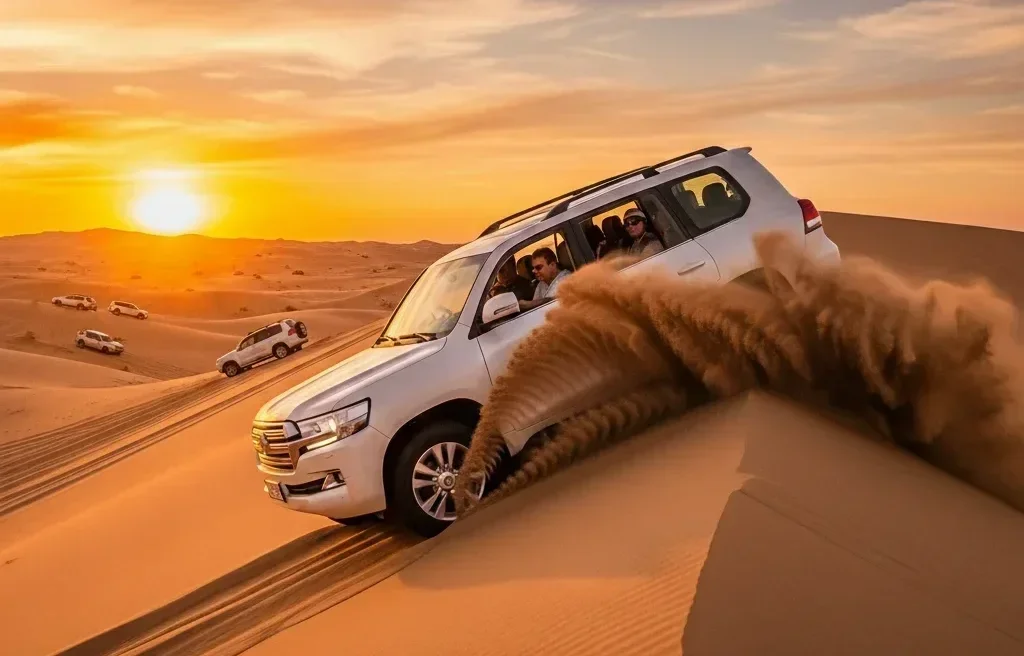
This is where the price actually earns itself. Regular desert dune bashing is fun but fairly tame — moderate inclines, wide turning space, and drivers who keep things comfortable for mixed groups including nervous first-timers. Red dune bashing is a different sport: steeper drops, sharper crest-and-fall movements, and drivers who lean into the terrain because the sand is firmer and the dunes taller. If dune bashing is the actual reason you're booking a desert safari, red dune is where the adrenaline lives.
The flip side: red dune bashing is genuinely rougher on the stomach and the spine. We steer pregnant travellers, guests with back issues, and children under 5 toward the regular safari every time, regardless of how much they insist they'll be fine. It's not snobbery — it's what our drivers see happen in the back seat.
Camp quality and crowd levels
Regular safari camps run at high volume — think 200–400 guests moving through a single large camp on a busy night, multiple BBQ stations, one big stage for the fire and tanoura show. It's lively and works well for group energy, but you'll queue for the buffet and share table space.
Red dune camps tend to be smaller and better spaced, often capped around 80–150 guests, with a slightly more polished buffet spread (grilled seafood options, a wider mezze table) and shorter queues. It's not a five-star restaurant either way — it's still a desert camp — but the red dune tier consistently rates higher in our post-trip guest surveys for 'felt less rushed.'
Side-by-side: regular vs red dune
Laid out directly, the two formats differ on five things that matter on the ground: price, drive time, dune-bashing intensity, crowd size, and suitability for nervous or younger travellers.
- Price: regular AED 90–180pp vs red dune AED 200–350pp
- Drive time from Dubai: regular ~45 min vs red dune 60–75 min
- Dune-bashing intensity: regular moderate vs red dune steep and thrilling
- Camp crowd size: regular 200–400 guests vs red dune 80–150 guests
- Best for nervous stomachs/young kids: regular is the safer pick
- Best for photography and Instagram: red dune wins decisively — the colour contrast at sunset is dramatic
The sunset photo factor nobody mentions
If you're chasing the classic golden-hour desert photo, red dunes deliver a noticeably better result — the rust-red sand against an orange sky produces far more contrast than the paler regular dunes, and operators generally time the red-dune photo stop closer to actual sunset because the drive is longer and the schedule is built around it. If your desert safari is partly about the photos (be honest, it usually is), this alone might justify the premium.
Who should book which — the verdict
Pick the regular safari if you're travelling with young children, anyone pregnant or with back/neck issues, or you're simply budget-conscious and want the classic Dubai desert safari checkbox ticked without paying premium rates. Our evening-desert-safaribudget-friendly package covers this exactly.
Pick red dune if dune bashing thrills and sunset photography are the actual point of your evening, you're travelling as couples or groups of confident adults, or you've already done the regular safari on a previous Dubai trip and want the upgraded version this time. Our evening-red-dunes-desert-safari-with-bbq-veg-dinner-quad-bike package bundles the red dune drive with quad biking, which pairs naturally with the more adventurous crowd this tier attracts. Browse the full range at /trip-type/desert-safari.
Can you do both in one trip?
Yes, and quite a few of our repeat clients do exactly this on longer stays: regular safari on day 2 for an easy, low-key evening, then red dune on day 5 or 6 once they've settled into the trip and want the bigger thrill. If you're planning a 5+ day Dubai itinerary, spacing these two out rather than picking one is a genuinely good use of two evenings, and it gives you a real basis of comparison beyond blog posts like this one.
A real case: a family of six who nearly overpaid
A group of six travelling together for a cousin's wedding trip initially assumed private was out of budget and booked six shared seats at AED 150 each, totalling AED 900. When they messaged us to ask about upgrading two members to red dunes separately, we pointed out that a single private red-dune vehicle for the whole group of six would cost AED 1,100-1,200 total — barely more than their existing shared booking, while giving them a dedicated vehicle, no waiting on other guests, and a coordinated pickup at one hotel instead of splitting across two.
They switched, and the lesson stuck with us: always run the group maths before assuming private is unaffordable. The break-even point where private starts beating shared per-person tends to land around four to five people for a standard package, and even earlier for red-dune or premium tiers where the shared per-person price is already higher.
Accessibility, dietary needs and other practical considerations
Both formats can accommodate dietary requests (vegetarian, halal is standard, and allergies with 24 hours' notice), but private bookings give kitchens more room to prepare something genuinely separate rather than relying on the shared buffet line, which matters more for serious allergies than casual preferences. If mobility is a concern, note that most shared 4x4s have a fairly high step-up into the cabin with no ramp option — private bookings can sometimes source a vehicle better suited to limited mobility, but this needs to be requested days ahead, not on arrival.
For guests managing chronic motion sickness, a private driver can genuinely tailor the intensity of dune bashing in a way a shared vehicle carrying five other opinions can't — this alone has swayed several of our guests toward private who otherwise would have gone shared purely on cost.
How to choose between similarly-priced operators
Once you've decided shared or private, the next decision is which operator, and pricing alone won't tell you much since the underlying camps and dunes are often shared infrastructure resold by multiple brands. Check for a listed DTCM trade licence, read reviews from the last two months rather than the last two years, and ask directly how many other vehicles use the same camp on your specific date — Fridays and Saturdays are consistently the most crowded nights regardless of which operator you book through.
For private bookings specifically, ask whether 'private' extends to the camp seating or only the vehicle — this single question resolves the most common post-booking disappointment we see, where guests assumed a fully private evening and arrived to find a shared dinner tent.
How to confirm you're actually getting red dunes, not just a red-dune label
Because 'red dune' has become a popular marketing term, some listings use it loosely to describe a slightly more remote standard site rather than the genuine deeper-colour dune fields near the Al Faya or Fossil Rock areas. Ask the operator directly which specific area their red dune package visits, and cross-check that name against recent reviews mentioning the same location — if reviewers consistently describe similar terrain and colour, that's a good sign the listing is accurate.
Also confirm the drive time, since genuine red dune sites are 60-75 minutes from central Dubai versus 30-45 for standard sites — a 'red dune' package advertising a 35-minute drive is worth questioning before you book.
Dietary and comfort notes that don't differ between the two
Food service, halal defaults, vegetarian handling and allergy accommodation are essentially identical between red dune and standard packages, since both typically use the same buffet-style catering model regardless of which dune field you're bashing on. Don't expect a meaningfully different menu just because you're paying the red dune premium — the extra cost buys terrain and exclusivity, not a different dinner.
One genuine difference worth knowing: red dune sites, being more remote, sometimes have slightly more basic restroom facilities than the larger, more established standard camps closer to the city, since the infrastructure investment is smaller at less-trafficked sites. If facilities matter to you, ask specifically rather than assuming parity.
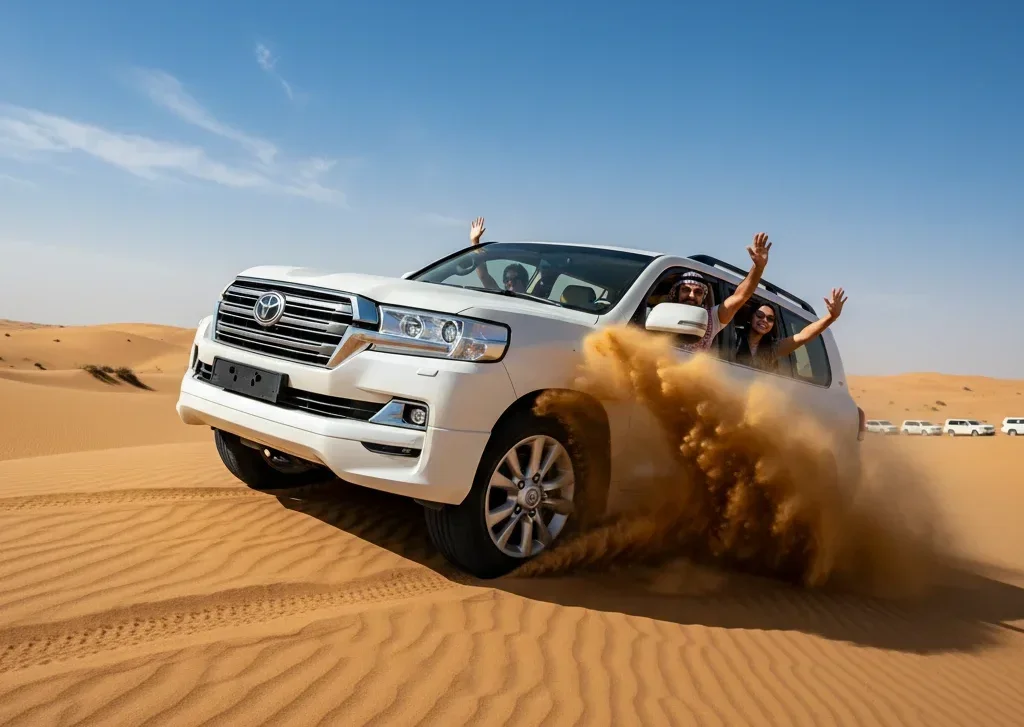
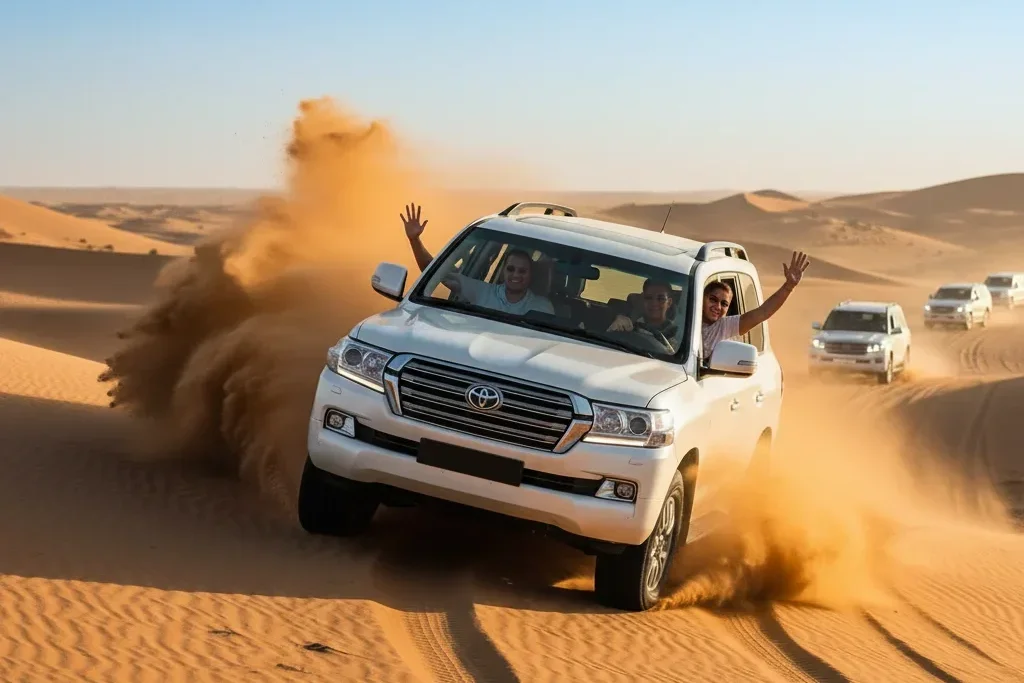
Tours mentioned in this guide
Frequently asked questions
How much more does a red dune safari cost than a regular one?+
Prices for Red Dune Desert Safari vs Regular Desert Safari Dubai range from AED 89–250 per adult depending on the package. Popular add-ons: Dune Buggy AED 500. Child pricing and hotel pickup are shown on each tour page.
Is red dune safari too rough for kids?+
It can be — the steeper dune bashing is genuinely more intense, so we recommend the regular safari for children under 8 and anyone with back or neck sensitivity.
Why is red dune sand actually red?+
The Al Faya/Fossil Rock desert area has a higher iron oxide content in the sand, which oxidises to give the dunes their distinctive rust-red colour, especially vivid at sunset.
Which safari has better dune bashing?+
Red dune safari — the dunes are taller and steeper, giving drivers more terrain to work with for a genuinely more thrilling ride.
Is the red dune camp less crowded?+
Generally yes — red dune camps typically host 80–150 guests versus 200–400 at busy regular safari camps, because fewer operators make the longer drive.
Which is better for sunset photos?+
Red dune, without question — the colour contrast between the red sand and the sunset sky photographs far better than the paler regular dunes.
Can I do quad biking on a red dune safari?+
Yes, many red dune packages bundle quad biking or offer it as an add-on for roughly AED 100–150 for a 15–20 minute session.
Do both safaris include the same BBQ dinner?+
Both include a BBQ buffet dinner with live entertainment, but red dune camps tend to offer a slightly wider spread and shorter queues due to smaller guest numbers.