Every single week someone messages us asking the same thing: "is a private desert safari actually worth double the price?" The honest answer depends entirely on who you're travelling with and what you hate more — sharing a car with strangers, or spending an extra AED 500. We've run both formats hundreds of times out of Dubai, so here's what actually changes between them, not the marketing version.
What you actually get with a private desert safari
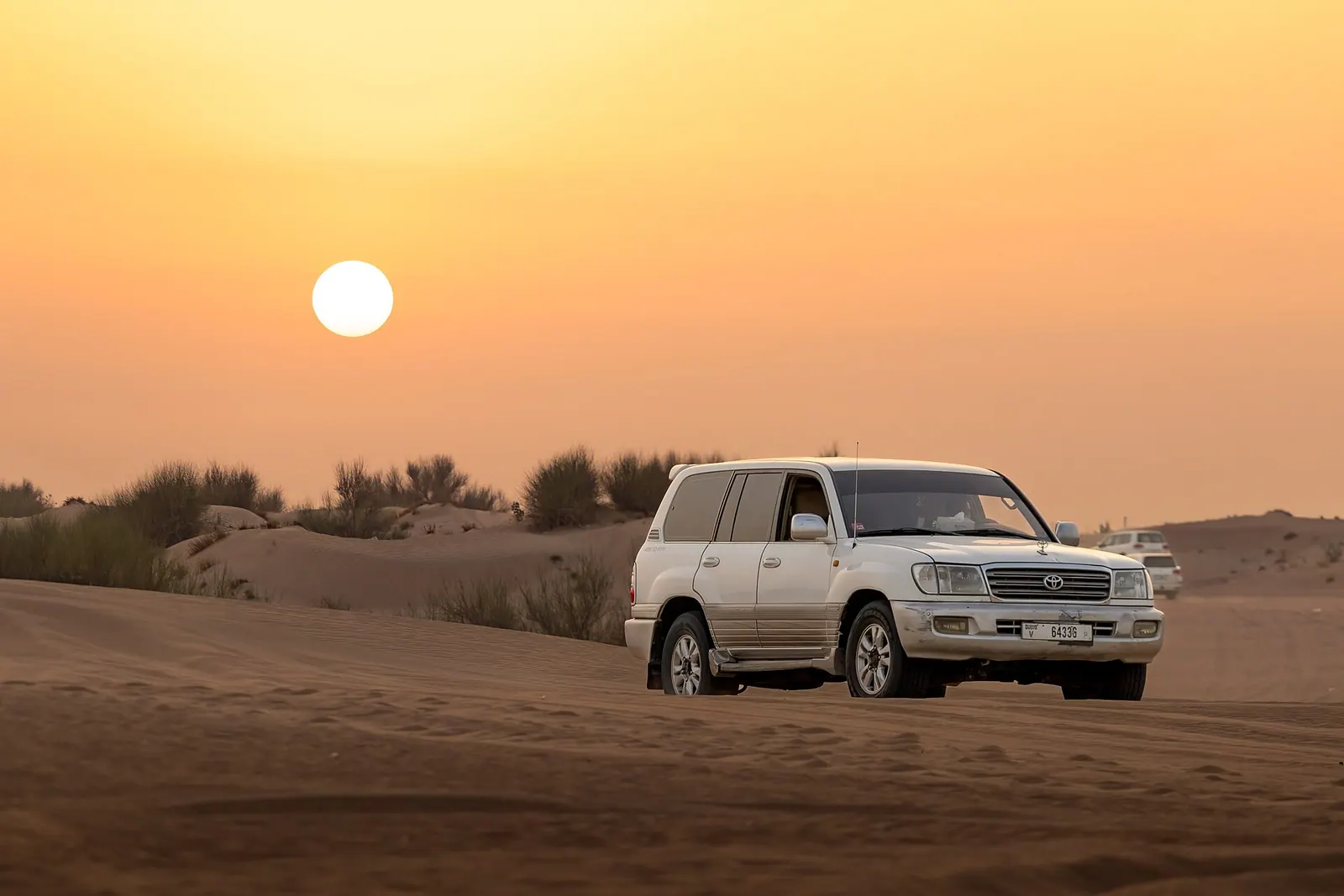
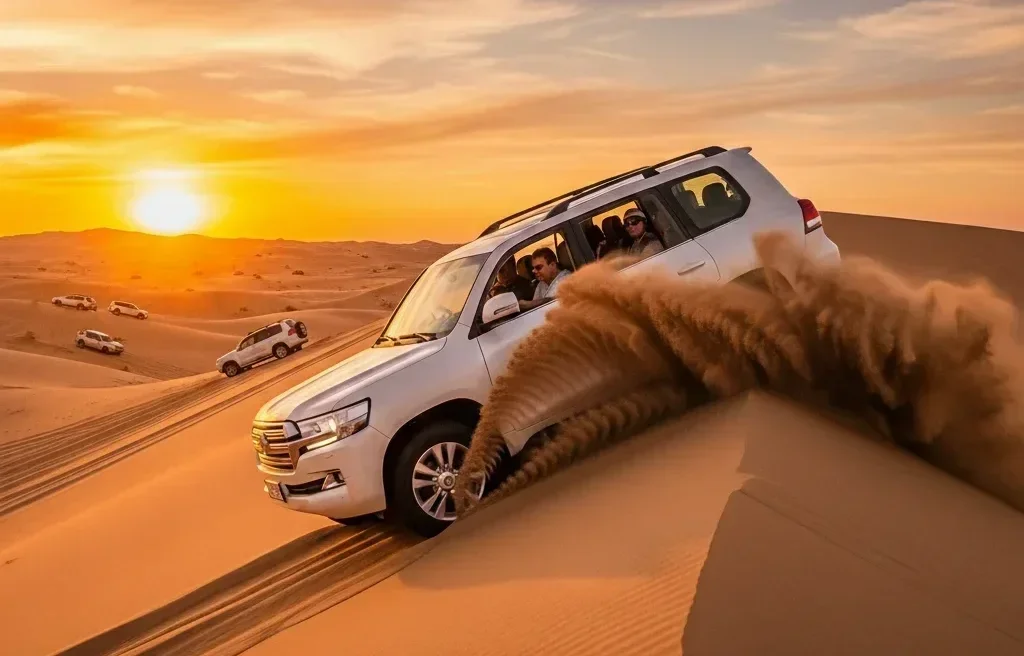
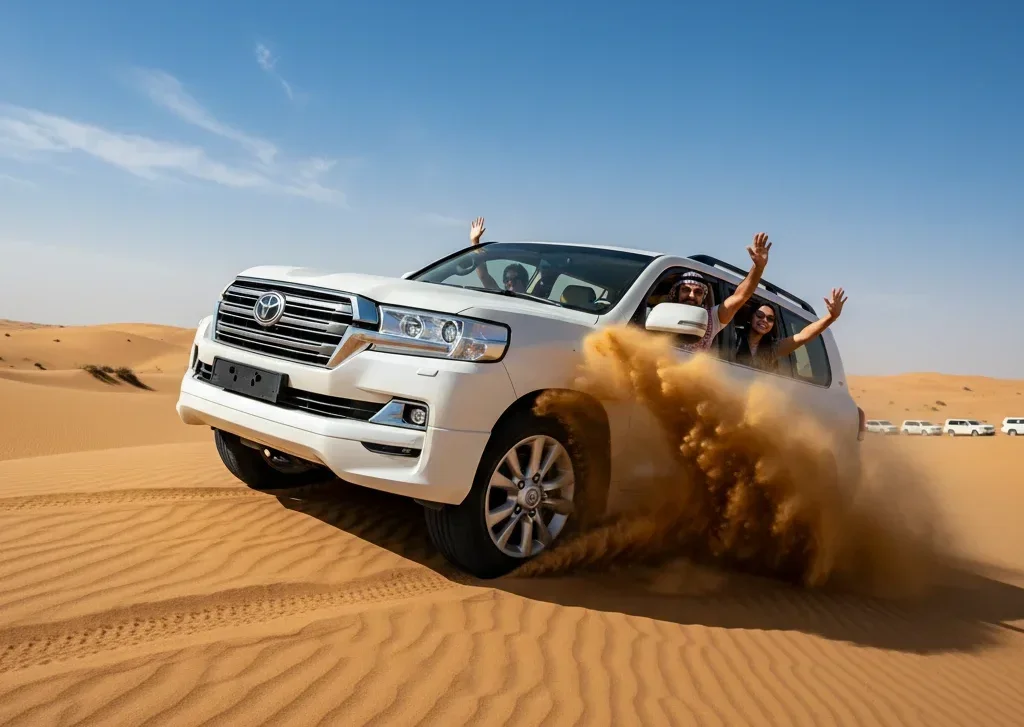
A private desert safari means the vehicle, driver and (on premium bookings) the camp table are exclusively yours — no strangers, no shared schedule. Pickup is first-stop, every time, at a time you choose within the operator's window. If you want 45 minutes of dune bashing instead of 25, or you want to skip the standard photo stop and go straight to camp, a good operator will flex around you.
This matters most for three groups: couples on a honeymoon who don't want to photobomb someone else's proposal video, families with toddlers who need to stop and start on their own clock, and anyone with mobility or medical considerations where a rigid group schedule is genuinely stressful. We've also had guests book private purely to control dune-bashing intensity — a private driver will happily go gentler (or wilder) than a shared vehicle can, since there's no group consensus to manage.
The actual price breakdown in 2026
A standard shared evening safari with BBQ dinner runs AED 90–180 per person in 2026, all-in with pickup, dune bashing, camel photos, shisha, live entertainment and a buffet dinner. A shared red dune (premium) safari with better dunes and a nicer camp sits at AED 200–350 per person.
Private safaris are priced per vehicle, not per person, which is the part people miss. A private Land Cruiser (seats up to 6) for a standard evening safari runs AED 700–1,000 total — meaning a family of four is paying roughly AED 175–250 each, not far off the shared premium tier. A private red-dune or overnight package pushes to AED 1,000–1,400 per vehicle. Split across a group of 5–6, private stops being a luxury tax and starts being a rounding error.
- Shared standard safari: AED 90–180 per person
- Shared red dune / premium safari: AED 200–350 per person
- Private standard safari: AED 700–1,000 per vehicle (up to 6 pax)
- Private red dune / overnight: AED 1,000–1,400 per vehicle
- Overnight desert camping (either format): AED 350–600 per person
Side-by-side: shared vs private
If you strip away the sales pitch, the comparison comes down to five factors that actually change your evening: price per person, pickup timing, schedule flexibility, privacy, and vehicle condition (private vehicles tend to be newer, since operators put their best fleet on premium bookings).
- Price (solo/couple): shared wins clearly — roughly a third of the cost
- Price (group of 5+): near tie once split per person
- Pickup time: private wins — first stop, guaranteed
- Schedule control: private wins — start/stop on your terms
- Social atmosphere: shared wins — meeting other travellers is part of the fun for many
- Vehicle age/condition: private slightly favoured
Who should book which — the honest verdict
Book shared if you're solo, a couple on a budget, or a group of 2–3 who don't mind a fixed schedule — the AED 90–180 evening safari (like our evening-desert-safaribudget-friendly package) delivers 90% of the experience for a third of the private price. Book private if you're a family of 4+ splitting the cost anyway, celebrating something (honeymoon, anniversary, proposal), travelling with an elderly parent or small child who needs flexible timing, or simply hate waiting on a bus schedule while on holiday.
A middle path a lot of our repeat guests use: book shared for the standard evening safari on arrival night to get oriented, then upgrade to a private red-dune or overnight safari later in the trip once they know they want more time in the desert. You can browse both formats side by side under /trip-type/desert-safari before deciding.
Booking mistakes we see constantly
The biggest one: booking shared and expecting private-level attention because the listing photo shows an empty dune. Read the inclusions line, not just the hero image — if it says 'seat-in-vehicle' or 'shared transfer,' you will be grouped with other travellers. The second mistake is booking private and assuming it includes VIP camp seating; some operators only make the transport private while the camp experience (dinner, shows) is still shared with everyone else at that site. If a private camp table matters to you, ask explicitly before paying.
Tours mentioned in this guide
Frequently asked questions
How much does a private desert safari cost in Dubai?+
Prices for Private Desert Safari Dubai vs Shared Safari range from AED 89–400 per adult depending on the package. Popular add-ons: Quad Biking AED 75, Dune Buggy AED 500, Falcon Photo AED 10, VIP Camp Seating AED 50. Child pricing and hotel pickup are shown on each tour page.
Is a private desert safari worth it for a couple?+
For two people it roughly triples the per-person cost compared to shared, so it's worth it mainly if privacy, flexible timing or a special occasion matters more than saving money.
Does a private safari mean a private camp too?+
Not always — some operators only privatise the vehicle and pickup, while the BBQ dinner and entertainment happen in a shared camp. Confirm this detail before booking if a fully private evening matters to you.
How many people fit in a private desert safari vehicle?+
Standard Land Cruisers and Nissan Patrols seat up to 6 passengers plus the driver, which is why private pricing works out best for families or small groups.
Is shared desert safari safe with strangers in the car?+
Yes — shared vehicles are run by licensed, background-checked drivers and it's the standard, widely used format for the vast majority of Dubai desert safari bookings.
Can I upgrade from shared to private after booking?+
Usually yes, if you contact the operator at least 24–48 hours before your date, subject to vehicle availability — it's easier to just book private from the start if you already know you want it.
Which is better for first-time visitors to Dubai?+
Shared is the better first experience for most solo travellers and couples — it's cheaper, sociable, and gives an accurate first taste of desert safari before deciding if a private upgrade is worth it next time.
Do private safaris include the same dune bashing?+
Yes, the dune-bashing route and vehicle type (4x4 Land Cruiser or Patrol) are the same — the difference is pacing and whether you share the ride with other guests.